
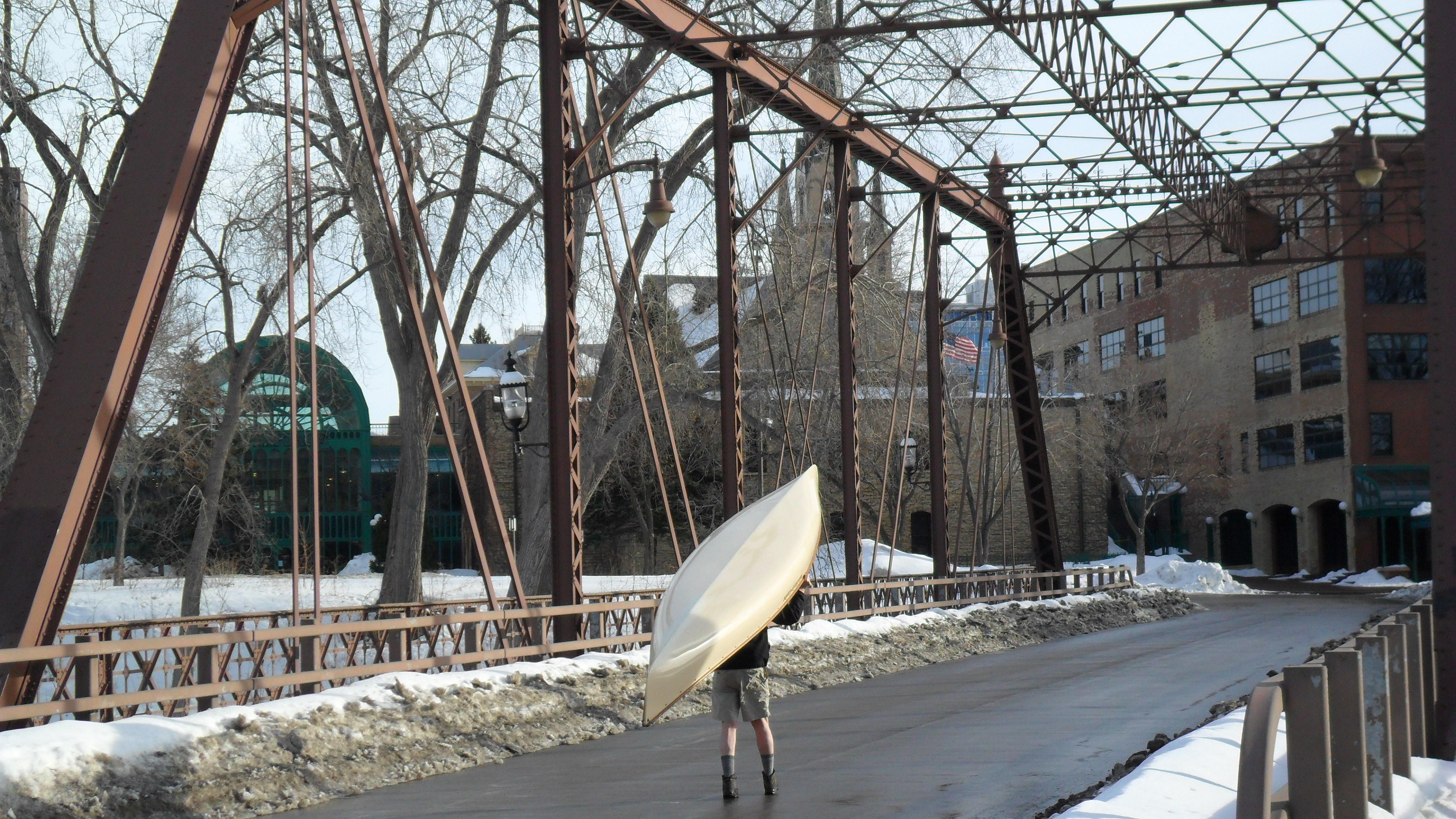
It may not be a bridge over troubled waters, but it is close to the high water mark.
Many old folkies have called one of the land masses connected by this span of steel, home. Some still do. I first wandered about this environ back in 1982, a fresh-faced lad of well, 27 years. Here I watched chickens scratch, listened to Dick Rees’s fiddle and enjoyed my spare time, courtesy of marginal employment. Not much different today, except that now, I only get to hear Mr. Rees on the radio from time to time and both my chickens (no relation to those referenced above) are scratching the dirt in that big hen-house in the sky. Lest we both lose track here, let me remind all that if, yes if, you correctly identify the location of the landmark above and submit that answer to “Comments” at the bottom of the page, you too could join nines of others in the fraternity of “cotton swab” winners. Several of those winners have actually received those boxes and may very well be using putting those soft, fuzzy tips to good use, as we “speak.” Read on if you dare and towards the bottom of the post I’ll announce last week’s winner.
Cedar Bend aka “The Standing Cedar”
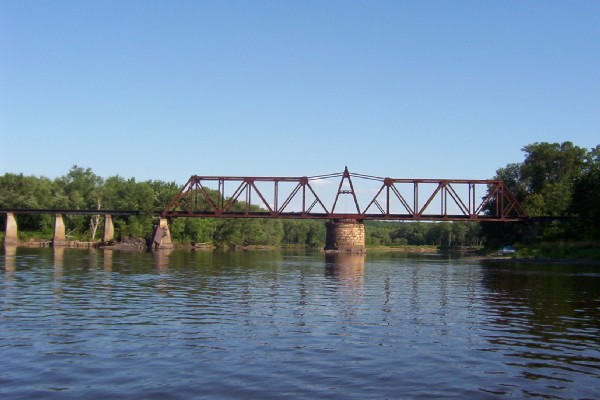
The Cedar Bend Drawbridge was built in 1887 by a forerunner of the Soo Line Railroad as part of its Minneapolis to Sault Ste Marie mainline. This route carried passenger traffic until 1961. This rail line was sold to the Wisconsin Central Railroad, which was subsequently bought out by the Canadian National Railroad in 2001. The major user of the bridge today is the Osceola & Saint Croix Valley Railway, a tourist railroad line run by the Minnesota Transportation Museum.
In my writing last Friday, I skipped, jumped and virtually paddled the length of Washington County past Catfish Bar, through Lower St. Croix Lake, under the lift bridge at Stillwater and beached the “post” at Cedar Bend, a southeastward curve in the St. Croix River about eight miles south of Osceola, Wisconsin. Cedar bend “marked the boundary between the country of the Dakota on the south and that of the Ojibwe on the north as determined by the treaty at Prairie du Chien , August 19th, 1825, (about tea time – my addition).” Upham\’s Minnesota Place Names: A Geographical Encyclopedia It was named for “an old cedar tree standing on a high bluff” and also for “cedars that lined the banks of the stream at this turn in its course” (History of Washington County and the St. Croix Valley, pg. 185 – Upham’s reference will get you there). The treaty document used the moniker, “Standing Cedar” for this St. Croix landmark. The bridge in the photo above doesn’t mark the exact spot of historic Cedar Bend but enjoys the same name (If you love all things “bridge” visit John a Weeks III\’s site of photos and descriptions of Minnesota bridges ). You might even find the bridge in the Mystery Photo for this week.
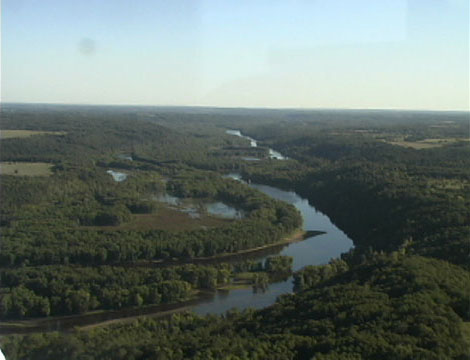
Cedar Bend - youre looking south? from the Minnesota bluffs
Sunrise, Sunset
To get to the Sunrise Landing on the Minnesota side of the St. Croix in Chisago County, you’ve got a bit of work to do first. That involves paddling up to the Dalles at Taylor’s Falls/St. Croix Falls, portaging through one of the downtowns and then sliding the canoe into the water somewhere above the hydo-electric dam spanning the river twingst the twin towns. If it was 1840, you’d have had to navigate your way past “Quailtown” a resort of sorts on the north end of St. Croix Falls, where Sylvander Partridge and associates established a grogshop and of all things, a bowling alley with a reputation for having “drunken, midnight, orgies” (The St. Croix – Midwest Border River ) I don’t think I’d have made it. “Hey, could you use a banjo player?” One official was quoted in the book listed above uttering this lovely descriptor – “The quails in this Partridge nest are evil birds.”
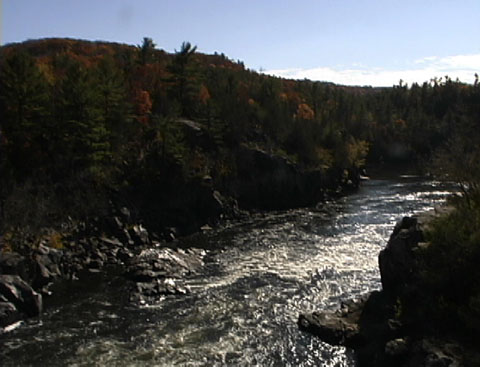
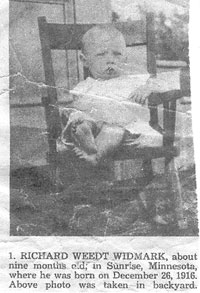 As for Sunrise, besides being the birthplace of Hollywood actor, Richard Widmark, the old town site is not far the mouth of the lovely Sunrise river, a major tributary of the St. Croix. The river empties in to the St. Croix within the borders of Wild River State Park. This gem is located north of Taylor’s Falls and hosts miles of river frontage, primitive cabins, trails, camping and a wild bird lover’s haven of a Nature Center. As a not so fresh-faced kid of 33, I vividly remember driving on an early outing with 5 month old Elizabeth to that same nature center, de-frosting mother’s milk for her feeding, and then watching the nuthatches, cardinals, chickadees and varieties of woodpecker with her through the large windows in the center. Twenty-two years have passed and soon I’ll be paddling by with a wave and a grateful nod to those who came before and had the fore-sight to preserve this lovely bit of country from development. Those same folks and the heirs to that legacy will be honoring their organization’s 100th anniversary. Check them out at the St. Croix River Association.
And the Winner Is….
??????????
??????????
Diane Gamm!!!!
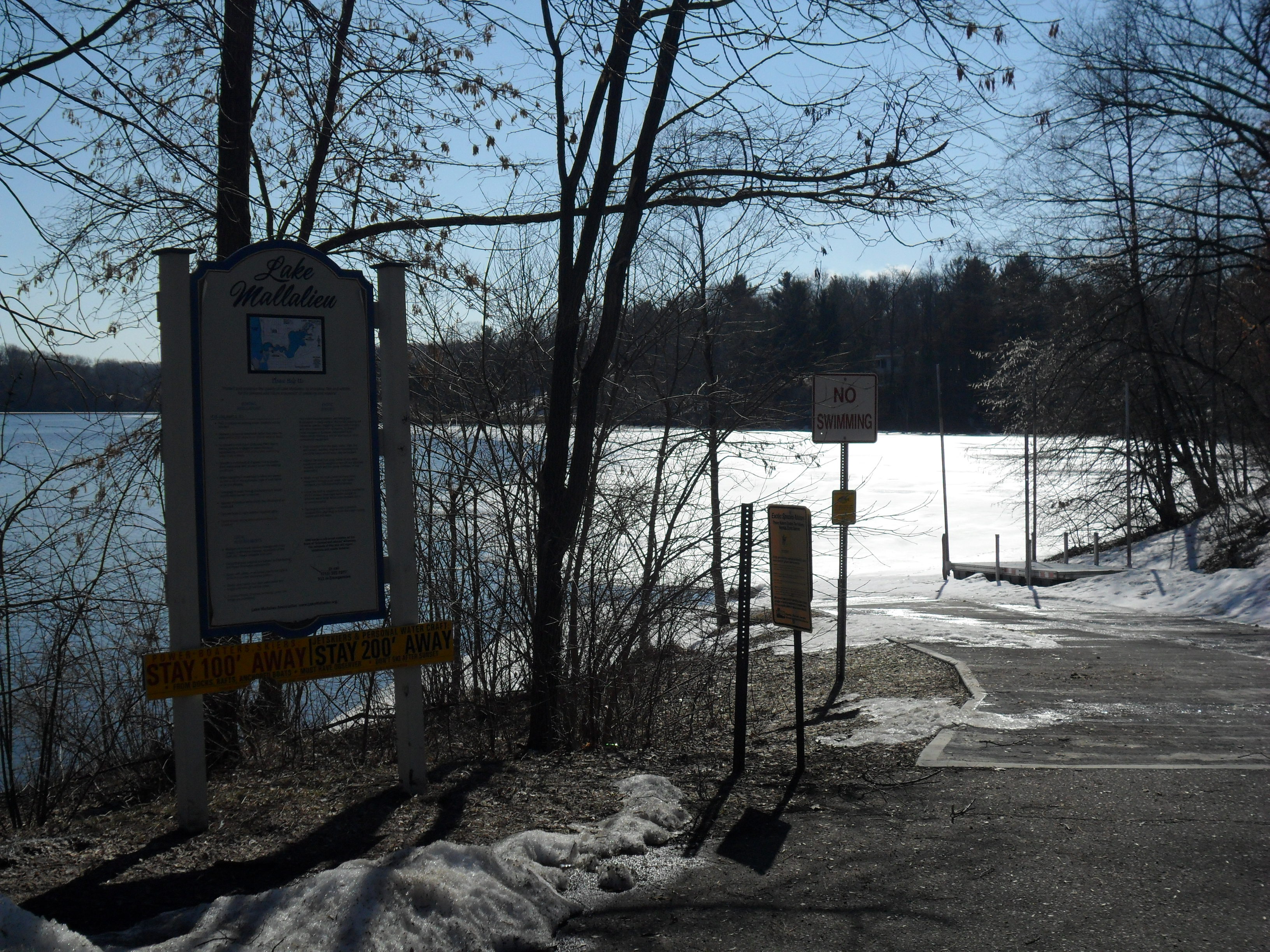
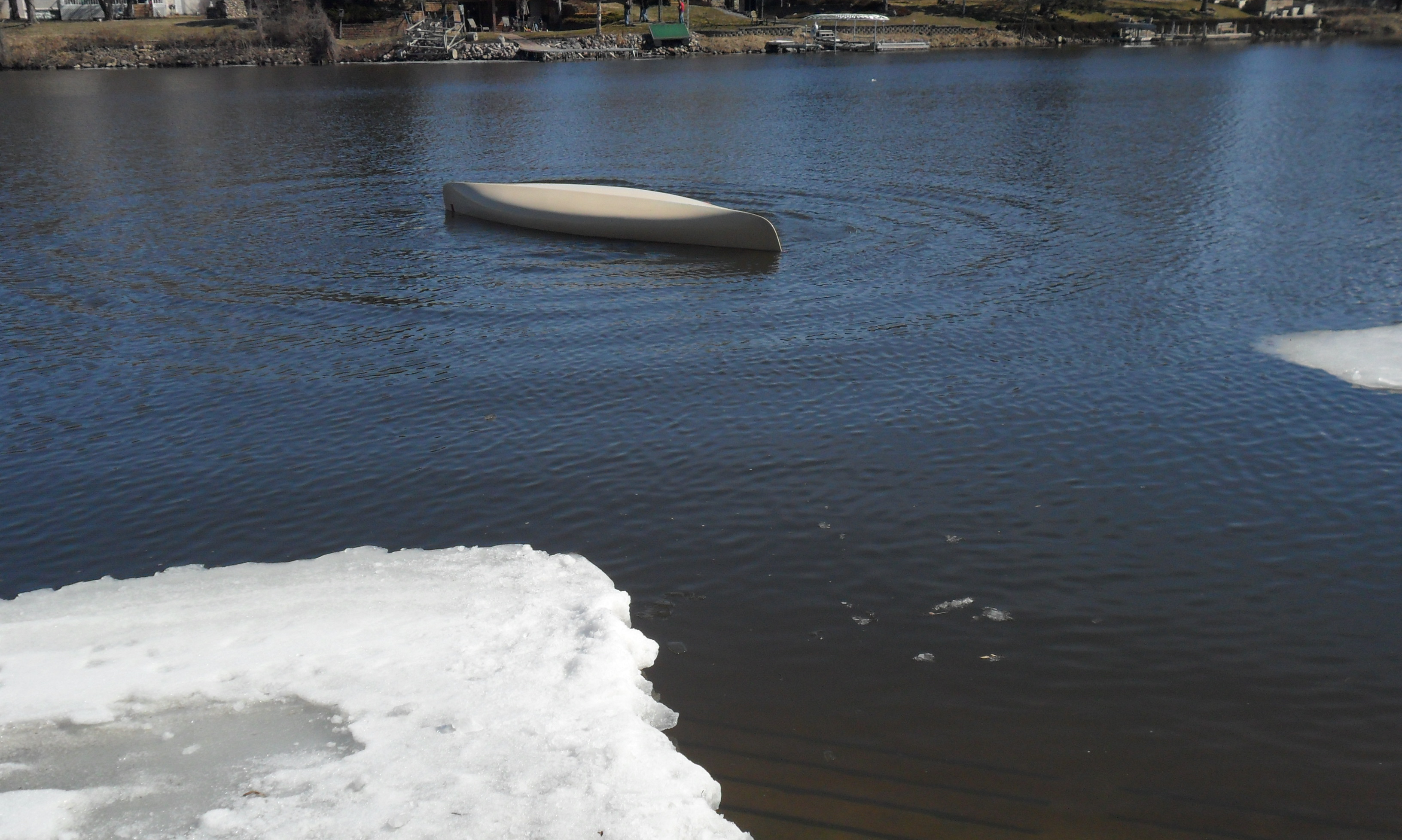
For her description of this Wisconsin Landing – “This is Lake Mallalieu in Hudson WI, and the Willow River widens out here before it empties into the St. Croix River. It would be a great day to be out on the water, rather than sitting at my desk!” Several other astute geographers correctly identified the site but the two-river connection in Diane’s description put her into the winner’s circle this time. Congratulations to all the entrants, correct or not. Thanks for having fun with this along with Moi. Take care and see you soon. Two weeks to departure and details of the Launch Party to follow soon. Best Wishes, Corey
 Paddlin' Madeline