
“Oh the Hills are alive (extend “ive”) with the sound of Mu (long “Mu”) sic.” Well, bells at least. Use all your senses except smell, and maybe not taste either, and guess where this movie was taken. Guess correctly, scroll down to “Comments” at the bottom of the post, and enter your answer. All correct answers will be gathered and one randomly chosen.  What do you win? You’ll get a brand new box of “Cotton Swabs.” Sorry, this older photo has me cutting one in half so two of our “almost” grand prize winners could at least get something… but you might win the entire unopened box. Okay, that’s enough for this week’s contest. Who won last week’s contest and where was the mystery photo taken? Well here’s the photo and others from this St. Paul landmark. My wife, Lois used to ride her bike up there and had a garden spot nearby in the 1980s.

 Got it yet? The ancient people known as the “Hopewell” occupied this high bluff more than 1,500 years ago. In more recent times the Dakota used the same site for a similar purpose. What was it?

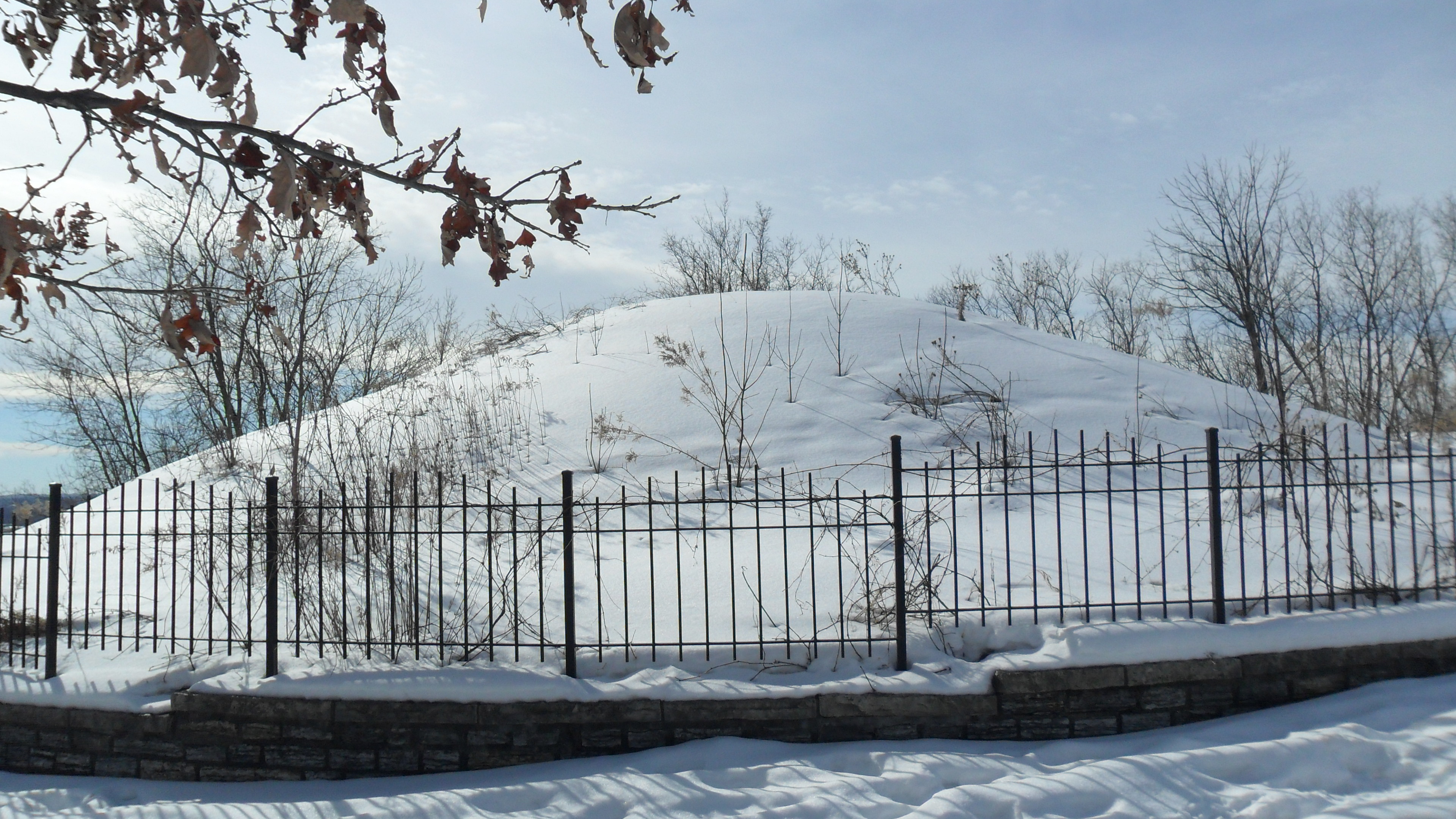 Both groups valued this commanding view of the Mississippi River valley as sacred ground in which to bury their dead. Their burial practices though, varied.
“Although there was much diversity in the mound-building customs, the typical Hopewell mound had a distinct internal structure. A low, circular platform of clay was constructed at the center of the mound. Ashes of the deceased were placed in the concave top of the platform, and sometimes fine pottery and stone tools were also included. This was all covered by the conical mound, which consisted of alternating layers of sand and earth. The Hopewell capped the mound with a thick layer of gravel and pebbles.
In more recent times, the Dakota Indians used this site for their burials. Unlike the Hopewell, the Dakota wrapped the bones of their deceased in a buffalo skin before burying them. Valuable objects like knives, foods, pipes, or even horses or canoes were also placed within the mound. The Dakota may have used mounds constructed by the Hopewell or constructed their own on the same site. At least thirty-seven mounds once stood along the bluffs of the Mounds Park area; only six remain.” (National Park Service)
Mounds Park, established in 1893, is one of the oldest St. Paul parks. You can visit the park at 10 Mounds Blvd. Saint Paul, MN.

Looking at St. Paul, west and a bit north from the park. Where's that darn canoe? I had it a minute ago.

Looking southeast from the overlook
And the winner is….randomly chosen from two correct answers…Christine of St. Paul.
Congrats! Here’s a google map for anyone interested in a bird’s eye view.
Flood waters threaten. Stillwater, MN may be sandbagging today. You can keep hourly tabs on the Mississippi from the windows of the Science Museum in downtown St. Paul. Check out Museum Flood Watch (my title). Remember, before you put your paddle in the water, put a sandbag on your levee. Corey – Final Mounds Park memory –
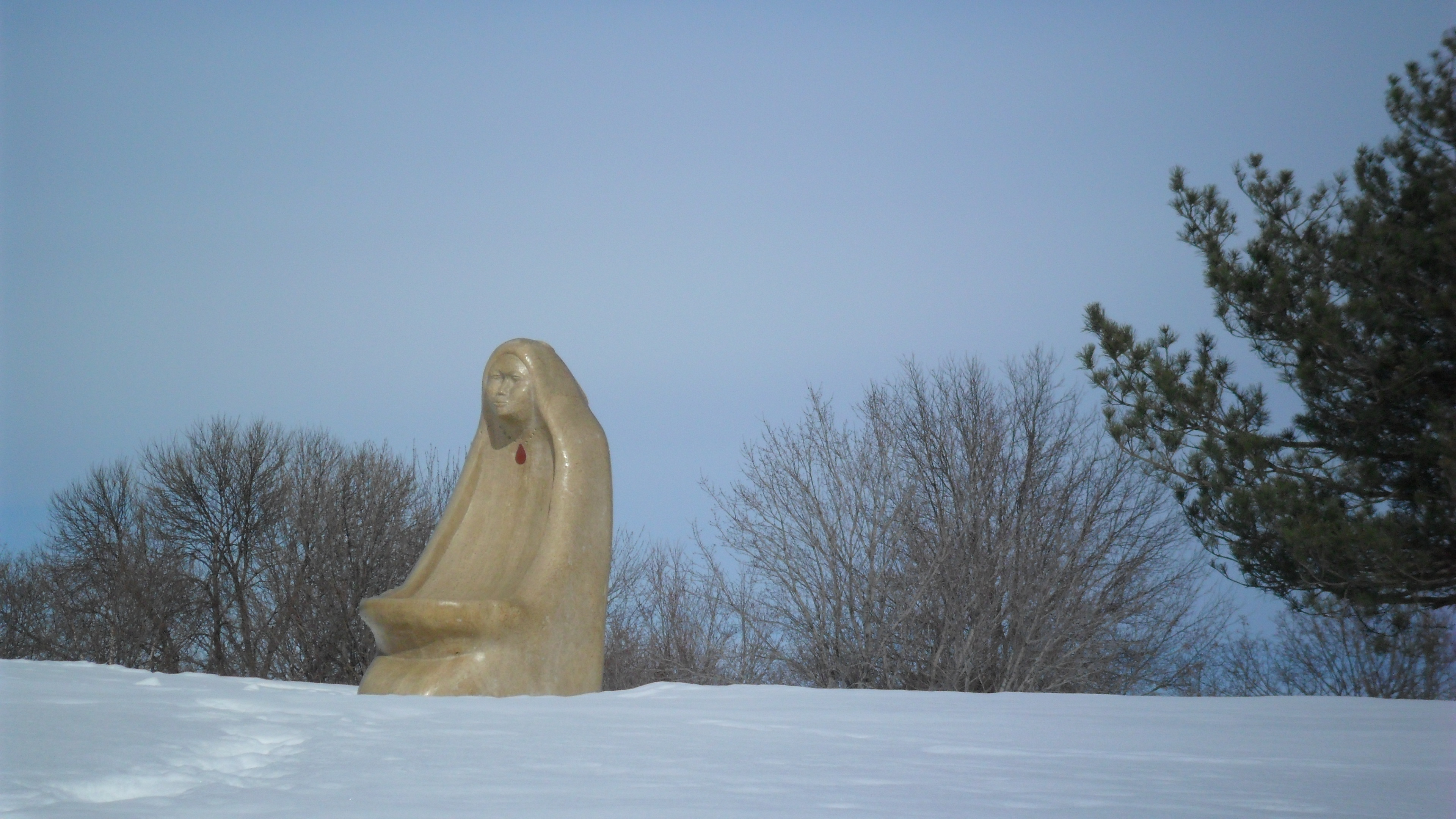
 Paddlin' Madeline